Baby Led Weaning vs Purees: Differences, Pros and Cons
October 9, 2026
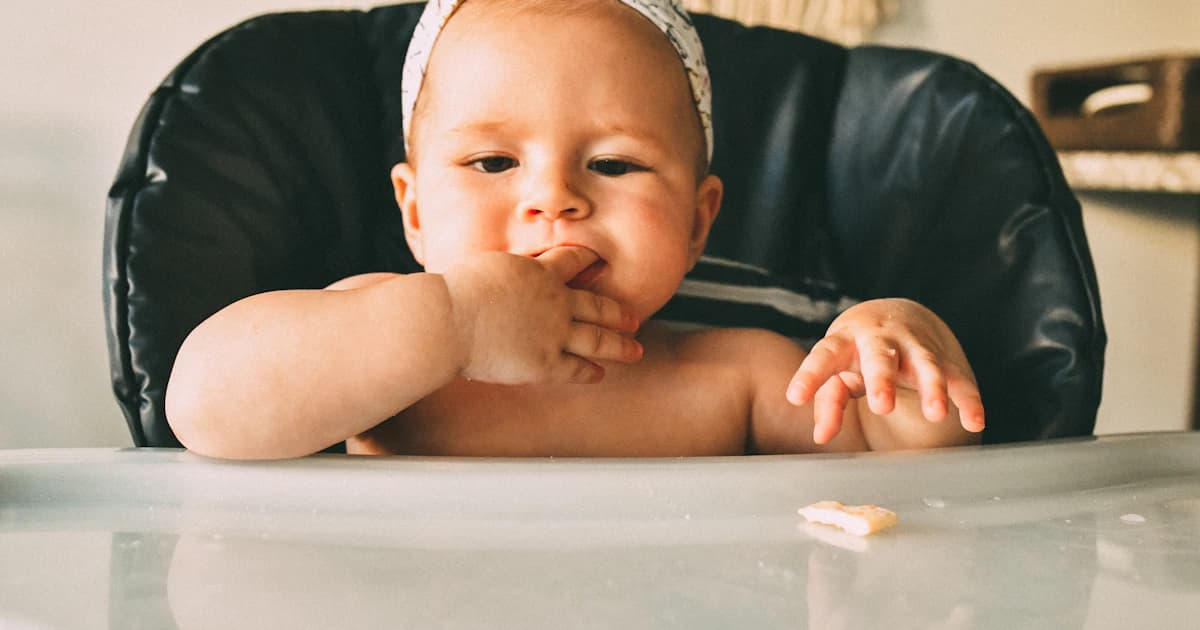
With purees, you spoon smooth food into your baby's mouth and thicken it over the weeks. With baby led weaning, your baby feeds themselves soft, finger sized pieces from the first meal. Neither is proven better. Both start at about six months, both need your baby sitting upright with you watching, and many families do both. The right start depends on your baby's readiness, who feeds them on a weekday, and how you feel about mess and gagging.
What is the difference between baby led weaning and purees?
Who holds the food, and what texture it starts at.
Purees, also called traditional weaning or spoon feeding. You choose the food and the amount, and you hold the spoon. Food starts smooth and moves to mashed, lumpy, then soft pieces. The CDC's guidance on introducing solid foods describes starting with smooth, mashed or pureed foods and moving to thicker, lumpier ones later.
Baby led weaning, or BLW. You choose the food. Your baby chooses how much and whether, picking up soft pieces and bringing them to their mouth from day one. There is no spoon stage.
Everything else is shared. The CDC says a baby can begin solid foods at about six months, and that introducing food before four months is not recommended.
Baby led weaning vs purees at a glance
Who feeds. Purees: you. BLW: your baby.
First texture. Purees: smooth. BLW: soft solid pieces about the length of your finger.
Your job at the table. Purees: your hands, for the whole meal. BLW: your eyes, for the whole meal.
Prep. Purees: blending, often in batches you freeze. BLW: cutting family food to safe shapes.
Mess. Purees: some. BLW: a lot.
Gagging. Purees: less at first, more when lumps arrive. BLW: more in the first weeks, and normal.
What to plan for. Purees: moving on to lumps and finger foods in good time. BLW: enough iron and enough calories.
Easy to hand to a daycare or grandparent. Purees: yes. BLW: only with someone who knows the safe shapes.
What are the pros and cons of purees?
Pros
You can see how much your baby ate.
Iron rich foods such as iron fortified cereal or pureed meat are easy to get in.
Simple to explain to anyone else who feeds your baby.
Works for a baby who is ready for the spoon but cannot yet pick up and hold food.
Cons
Your hands are busy for the whole meal.
Some babies get used to smooth food and resist lumps if the move to texture comes late.
Batch cooking takes time, and jars cost money.
What are the pros and cons of baby led weaning?
The American Academy of Pediatrics covers this in Baby Led Weaning: Is It Safe?, and it is balanced on both sides.
Pros
Your baby eats a version of the family meal, so there is no second meal to cook.
Your baby practises chewing, grasping and controlling how much they eat from the start.
Meals can be shared at the table rather than spooned in separately.
Cons
The AAP names too few calories, low iron and choking as the risks to plan for.
It is messy, and some food ends up on the floor rather than in your baby.
It needs every caregiver to know which shapes and textures are safe.
The AAP says there are very few studies on the health advantages, so the claimed benefits are not proven.
Is baby led weaning better than purees?
There is no good evidence that either one is better. The AAP says very few studies have looked at the health advantages of baby led weaning, and it also says spoon feeding for a few days or weeks does not stop a baby learning to feed themselves. What matters more than the method is a ready baby, safe textures, iron rich foods, and an adult watching every bite.
Can you do baby led weaning and purees together?
Yes, and many families do. It is a real plan, not a compromise. Three simple ways:
By meal. Purees at the meals a daycare or grandparent runs, finger foods at the family dinner.
By food. Spoon the loose or sticky foods, like yogurt or oatmeal, and hand over the soft solid ones.
By week. Purees for the first week while your baby gets used to swallowing, then finger foods from week two.
What stays the same in all three: your baby sits upright, you are within arm's reach, and there is no feeding in a car seat, on the move or lying back.
Which start fits your family? Five questions
Take these in order. Each one pushes you toward purees first, finger foods first, or both.
1. Is your baby ready? Your baby sits up alone or with support, holds their head steady, opens their mouth when food comes near, swallows rather than pushing food out, and brings objects to their mouth. Ready for the spoon but not yet picking food up: lean purees first. If your baby was born early or struggles to chew and swallow, talk with your pediatrician first.
2. Who feeds your baby on a weekday? Several caregivers: lean both, with purees at the meals someone else runs.
3. How much time do you have at meals? Squeezed between work and a nap: lean purees for speed, or finger foods if you cook a family meal anyway.
4. How do you feel about mess and gagging? Self feeding brings gagging, which is loud, red faced and normal. Read our guide to gagging versus choking in babies before the first meal. If you cannot yet watch a gag calmly, lean purees first.
5. Does anything need extra care? Iron and calories are the two to plan for. A known feeding or swallowing concern, reflux, or a worry about growth: start with purees or both, and ask your pediatrician.
Mostly purees: purees first, moving to soft lumps and finger foods within the first weeks. Mostly finger foods: finger foods first, with a spoon for iron rich foods and anything too loose to pick up. A mix: both from day one.
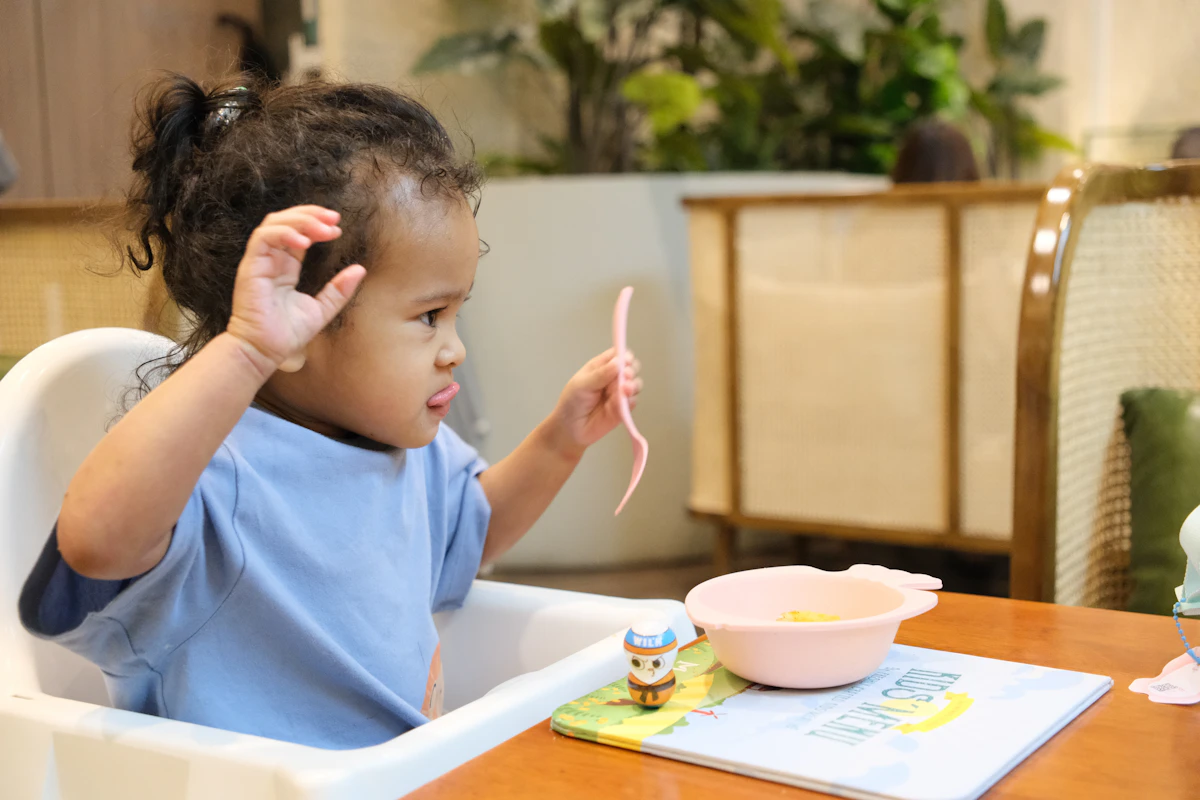
Not sure your baby is there yet? Our guide to the signs a baby is ready for solids walks through each one.
What does the first week look like for each start?
Offer solids once a day in week one, when your baby is awake, fed and not tired. Keep milk feeds as they are; our guide to how much milk a baby needs after starting solids explains why.
Purees first
First meals: one or two spoonfuls of a single smooth food, such as mashed banana or pear, or iron fortified infant cereal mixed with milk. Stop when your baby turns away.
Middle of the week: add a second food, such as mashed avocado or sweet potato. Let your baby hold a spoon too.
End of the week: offer an allergenic food in a smooth form, such as well cooked egg mashed fine or nut butter thinned with water. The CDC says to introduce potentially allergenic foods when you introduce other foods.
Finger foods first
First meals: soft, long, finger sized pieces your baby can fist: a steamed sweet potato wedge, a ripe avocado slice, a soft cooked broccoli floret. Sit close and expect play, not eating.
Middle of the week: add a soft piece of well cooked meat or flaked fish for iron. Offer a preloaded spoon of something soft if food is not reaching your baby's mouth.
End of the week: offer egg, cooked firm and cut into strips. Check the CDC's list of choking hazards and leave out whole nuts, whole grapes, raw hard vegetables and chunks of cheese.
Both from day one
First meals: a few spoonfuls of one smooth food, and one soft finger food on the tray at the same sitting, with no pressure to eat it.
Middle of the week: swap which food goes on the spoon and which goes on the tray.
End of the week: offer one allergenic food in the form your baby handles best.
What signs say the start is working?
Your baby leans toward the food, opens their mouth or reaches for the tray.
Gagging gets less frequent over a couple of weeks, even if it never fully stops.
Milk feeds carry on as before.
Your baby's mood and diapers look normal for them.
If your baby cries at every meal, coughs on most mouthfuls or seems to struggle to swallow, change the plan or call your pediatrician. If your baby simply will not eat, see what to do when a baby is refusing solids. Changing method is not a failure.
FAQ
Is baby led weaning riskier for choking than purees?
The AAP says some studies suggest it does not carry a higher choking risk than traditional feeding, and also notes that choking is one of the leading causes of unintentional death for infants. Either way the safeguards are the same: soft foods cut into finger shaped pieces, a high chair with the harness buckled, and an adult watching every bite.
Can you do baby led weaning with no purees at all?
Yes, as long as your baby is ready and the foods are soft and safely shaped. Plan the iron: offer soft meat, fish, egg, beans or iron fortified cereal on a preloaded spoon most days. A spoon your baby holds still counts as self feeding.
Is baby led weaning the same as traditional weaning?
No. Traditional weaning is the usual name, mostly in the UK, for spoon feeding purees first and moving to lumps and finger foods over time. Baby led weaning skips the spoon stage and starts with finger foods.
Can you switch methods after starting?
Yes. You can add finger foods to a puree start, or add a spoon to a finger food start, at any point once your baby is ready. A few days of one method does not lock your baby into it.
Does the choice affect picky eating later?
Nobody can promise a method will prevent picky eating, because the evidence is thin either way. What helps is offering a range of foods and textures, keeping meals calm, and never forcing bites.
Next step
The free Starting solids guide in the HelianWell library walks you through the first weeks. There is more on feeding in the first year on the HelianWell blog.